ServicesCity Water Filtration
City Water Filtration in Thousand Oaks
Treated tap water is safe, but it often tastes and smells of the disinfectant used to keep it that way. We fit a filter where water enters your home, so every tap and shower runs cleaner, and we set you up to keep it performing well.
What a city water system does, and when it makes sense
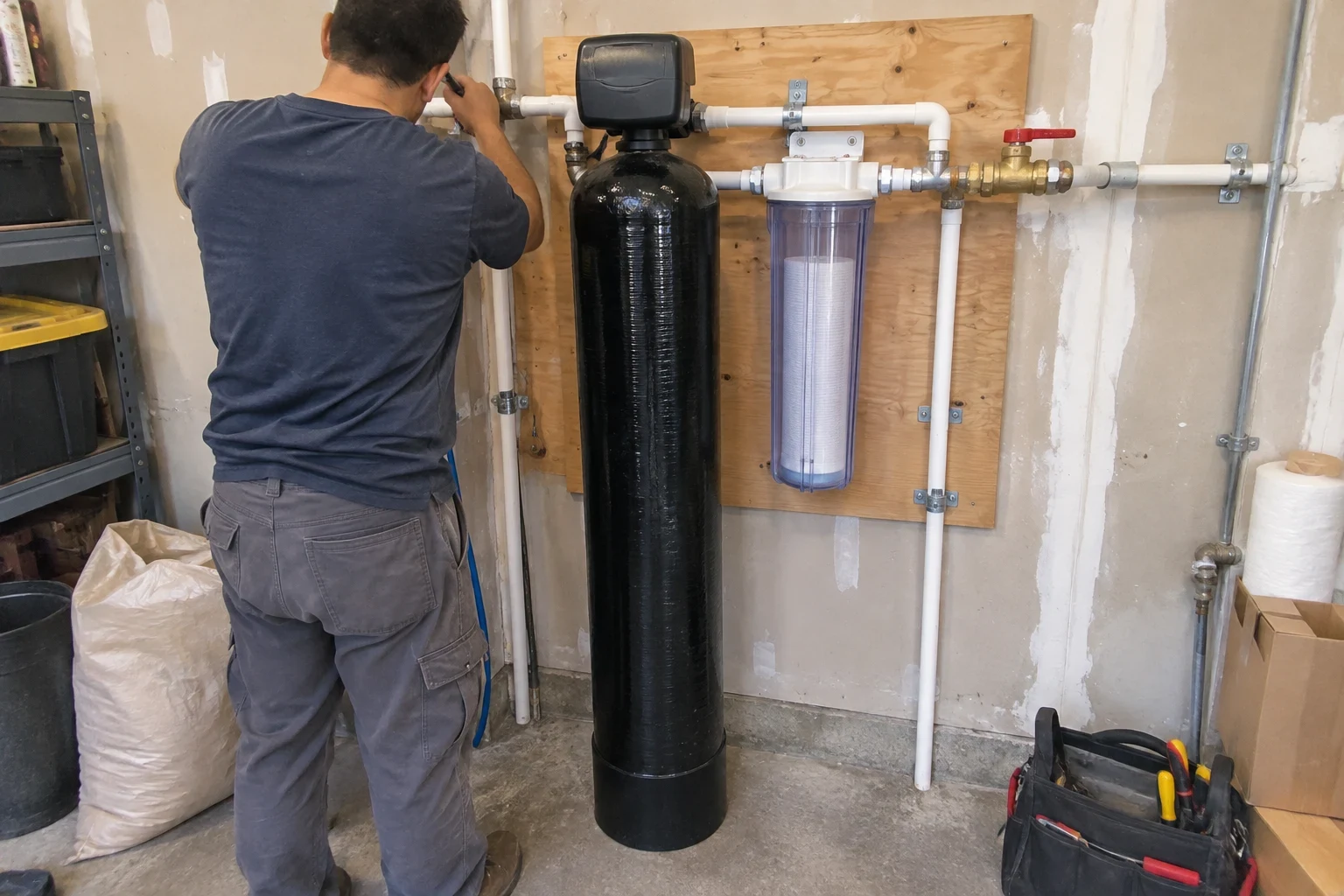
Municipal water is disinfected before it reaches you, usually with chlorine or chloramine. That treatment is doing its job, yet many people notice it in a glass of water, in the shower, or in coffee that never tastes quite right. A city water filtration system uses activated carbon to capture that taste and odor before water spreads through your home.
It is the right call when your concern is taste, smell and fine sediment, and you want the improvement at every faucet rather than at one sink. If you mainly want purified drinking water, our Reverse Osmosis page covers a system built for that. Many homes pair the two.
We think of this as an installation you will live with for years. So we choose media and housings that are easy to service, place them where you can reach them, and leave you knowing exactly what needs attention and when.
What the installation includes
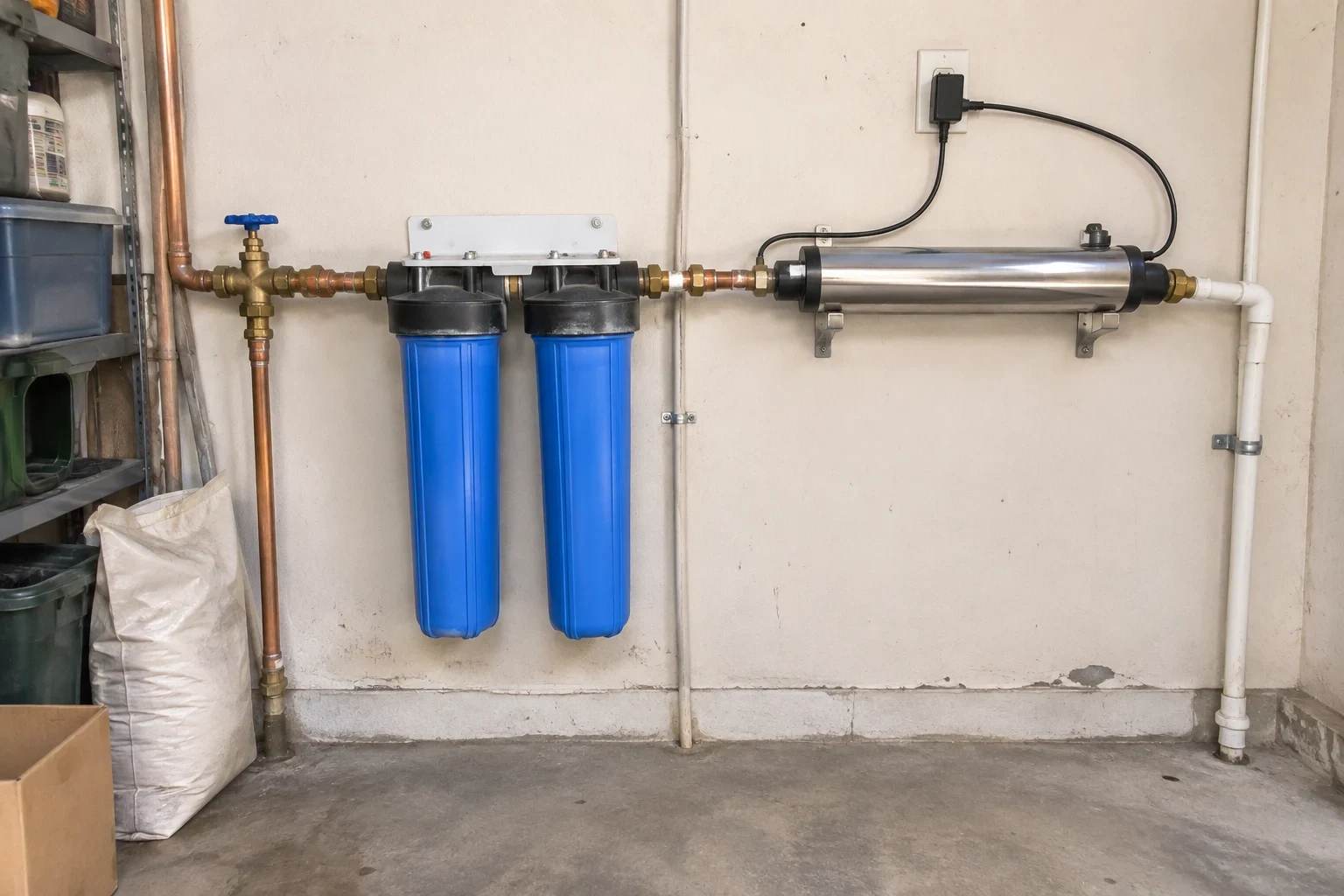
Sediment prefilter
Upstream of the carbon, a cartridge housing collects sand, grit and loose scale that ride in from the city mains. It protects the carbon and is the part you will replace most, so we mount it at a comfortable height that is easy to reach.
Carbon media tank
The main vessel holds carbon matched to the disinfectant your utility uses. Standard carbon handles chlorine well, while chloramine calls for a catalytic grade. Getting that pairing right is how the media lasts its full service life.
Bypass valve and shutoffs
One turn of the bypass sends water around the equipment, so your faucets keep running during a cartridge or media change. Valves on either side isolate the system without disturbing the rest of your home's supply.
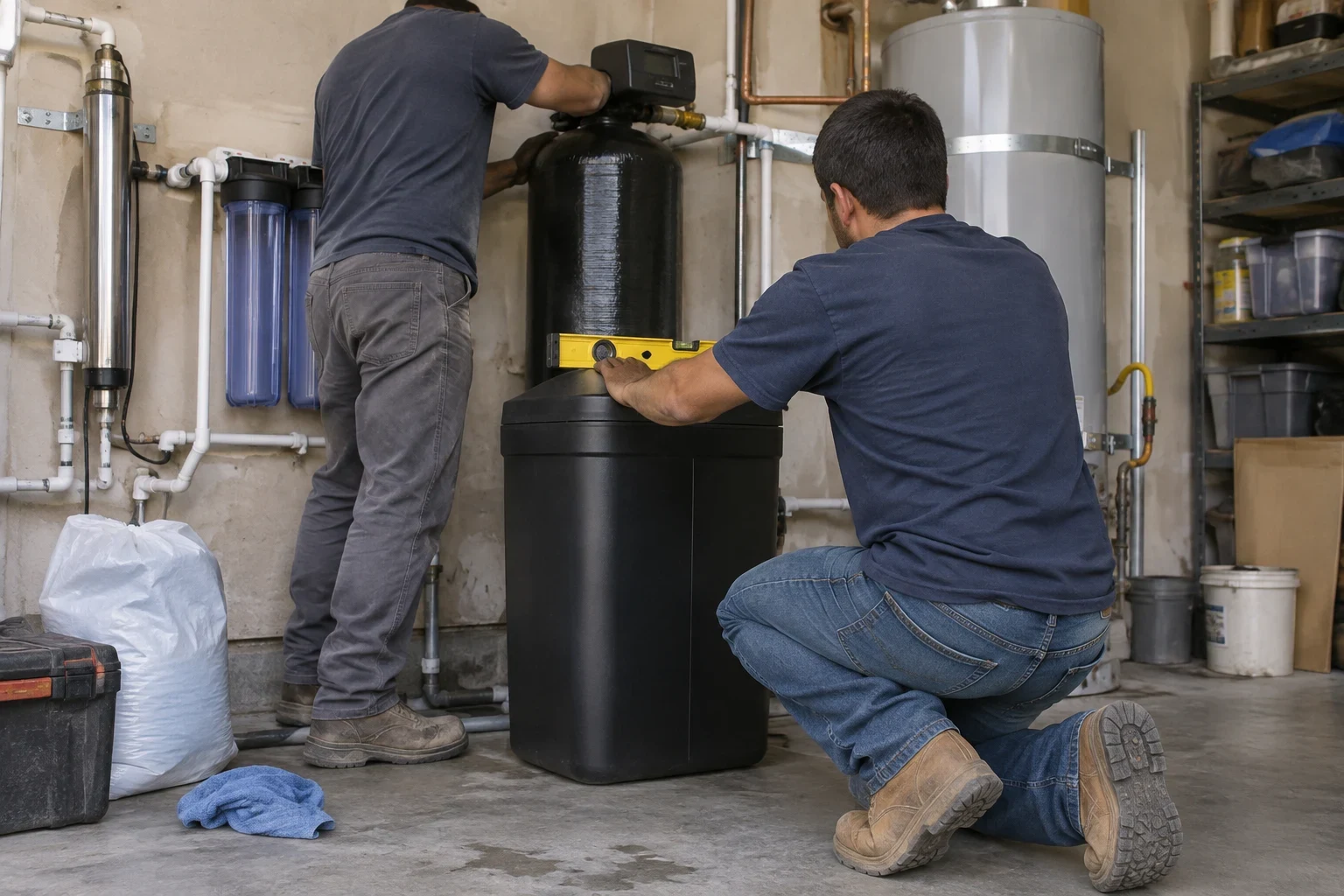
Neat, well-supported plumbing
Our connections to your main line use fittings suited to the pipe already in place. Runs are braced so no joint bears weight, and the finished setup sits orderly and clean in a garage or utility space.
A written upkeep schedule
We leave a note marking where each cartridge sits, how often your household should replace it, and what a drop in flow or a hint of chlorine coming back is telling you.
Signs your tap water could use a filter
- The bathroom smells like a pool
- Steam lifts chlorine out of hot water, which is why many people first catch the scent while showering.
- Coffee and tea taste dull
- Any disinfectant flavor in the tap ends up in your morning cup. Once the water is filtered, hot drinks usually taste the way they should.
- Cases of bottled water keep arriving
- When everyone in your home reaches for bottles to drink and cook with, the tap is sending a message. Filtered water often makes the bottles unnecessary, and cuts down on plastic too.
- Debris in faucet screens
- Fine grit building up in aerators or on appliance inlet screens shows what travels through your pipes. A prefilter catches it before it reaches your fixtures.
- Odor or cloudiness after utility repairs
- Work on the mains can leave water murky or more strongly scented for a stretch. Filtering at the main line evens out those changes.
How the work goes
- 1
First, a phone call
Describe what you notice in your water and how many people use it daily. From there we can tell you whether a city water system, a drinking water system or the pair of them fits your home.
- 2
Checking the main line
We locate where water comes into the house, note the pipe type and the room around it, and size the system to your flow. In Thousand Oaks that spot is often in the garage or on an exterior wall, which tends to make access easy.
- 3
The install itself
With the water off and the floor covered, we plumb the system and its bypass loop into the line. We flush the new carbon until it runs clear, restore full pressure and inspect each connection.
- 4
Walkthrough and cleanup
We show you the bypass, the shutoffs and how to remove a cartridge. We take the packaging and pipe scraps with us, and your water is running again before we go.
What moves the cost
No two homes or supplies are quite alike, so we review the details with you before any equipment is fitted. Our free install offer (we cover the cost) takes care of the labor of putting the system in. That leaves the equipment itself and the modest ongoing care that keeps it performing year after year.
- Number of people and bathrooms
- A busier home pulls more water at once, so it needs a bigger tank. That added capacity holds pressure steady when someone showers while the dishwasher runs.
- Carbon grade
- Catalytic carbon, which chloramine requires, costs more than the standard grade that handles chlorine. It also stands up to chloramine far longer, so the media does not wear out before its time.
- Pipe material and space
- Copper, PEX and older galvanized lines each call for their own fittings. A cramped area around the main can also mean additional mounting work.
- Replacement cartridges
- The prefilter cartridge is the expense you will notice most often. How soon it needs changing depends on your water use and how much grit the mains deliver, and we give you an honest estimate of both.
City water filtration questions
- My city water already meets safety standards. Why add a filter?
- Those standards cover safety, and the water is treated to stay that way on its trip to you. What people usually want to change is the disinfectant taste and odor, plus the fine sediment that collects in aerators. Carbon handles those while leaving the utility's treatment to do its own work.
- Does a carbon system soften water or prevent spots on glasses?
- It does not. Carbon is built to remove disinfectants and the flavors and smells they bring, and it leaves dissolved minerals alone. We explain clearly what the system will and will not change, so you are not paying for something that misses the problem you have.
- Should my water pressure change after installation?
- With a tank sized to your home's flow, you should not feel a difference at the faucet. If pressure slowly tapers off over a few months, the prefilter has usually filled with sediment and is ready to be swapped. The bypass valve makes that a short job.
- How much maintenance does the system need?
- The prefilter cartridge is the item you replace most often. The carbon media inside the main tank lasts much longer between changes. Timing depends on how your household uses water, and we leave a written schedule so the dates are never a guess.
- Can it be paired with a drinking water system?
- It can, and they work well together. By the time water reaches an under-sink Reverse Osmosis unit, the chlorine has already been removed, which is easier on the membrane and helps it stay in service longer.
Tell us about the water in your home
Let us know what you have been tasting, smelling or finding in your faucet screens. We will explain which system fits, how it goes in and what caring for it looks like over the years. We work across Thousand Oaks and nearby communities such as Westlake Village and Agoura Hills.