ServicesDual Tank Water Filtration
Dual Tank Water Filtration in Thousand Oaks
A dual tank system treats the water before it reaches any tap in your home. We size it to your household, place it where it is easy to reach, and show you the small routines that keep it working well for a long time.
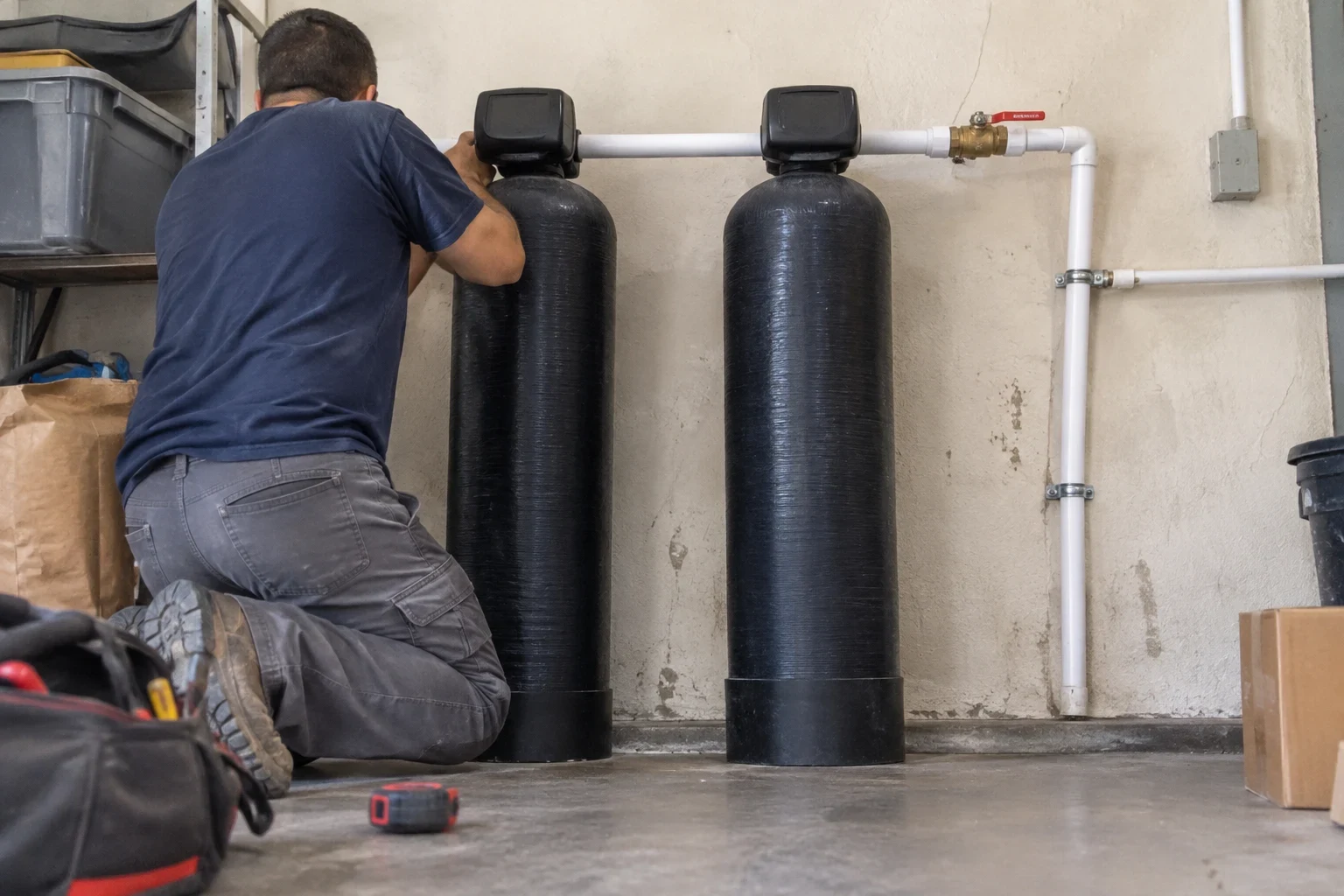
Two tanks, one quiet system at your main line
A dual tank system pairs a media tank, which does the treatment work, with a brine tank that lets the media recharge on a schedule. Water passes through on its way into your home, so the kitchen, the showers and the appliances all draw from the same treated supply.
It is the right call when you want treated water throughout the house rather than at one faucet, and when spotting, buildup on fixtures or a chlorine smell in the shower has started to bother you. For drinking water alone, a reverse osmosis unit under the sink is often the better fit, and we will say so.
We care most about what happens after install day. A well-placed system with clean connections and a sensible recharge setting asks very little of you, and it helps the plumbing and fixtures you already have stay in good shape longer.
What comes with the install
- Sizing based on your household
- We find out how many people are in the house, how many bathrooms see regular use and what a typical day of water use looks like. That sets the tank size and recharge timing, so the system handles your demand comfortably instead of running flat out.
- Placement that suits your home
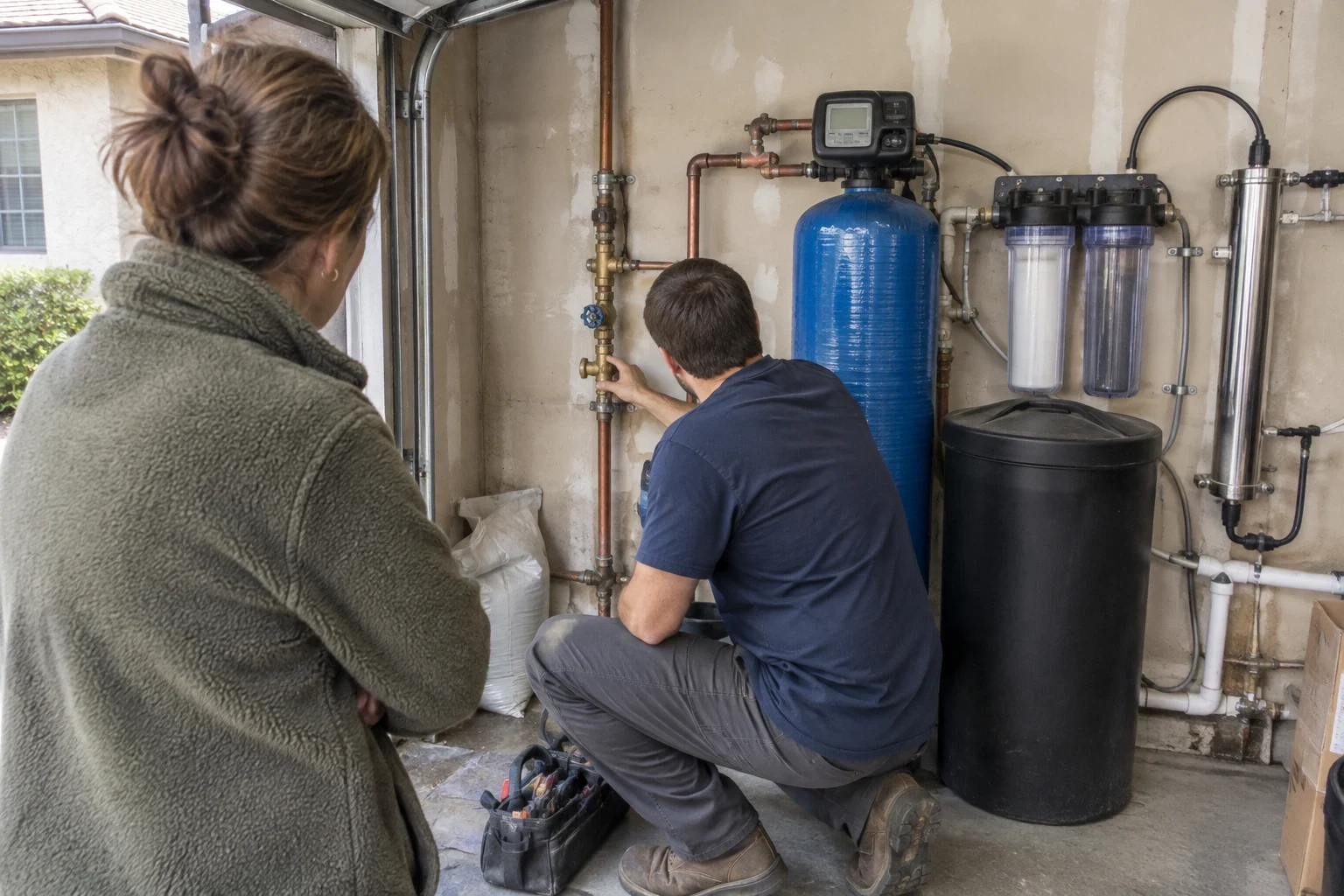
- Tanks normally sit near the point where the main line enters, usually in the garage or along a side wall. We pick a level, sheltered spot you can get to easily when it is time to add salt.
- Bypass valve and clean connections
- Each install includes a bypass valve that sends water around the tanks while they are serviced. Every connection is made neatly and pressure-checked before we head out.
- Free salt to get started
- On install day we load the brine tank with salt at no charge, so the system is ready to run from the start.
- A walkthrough and upkeep list
- Before leaving, we walk you through the control head, the bypass and checking the salt level, and we leave a short list of what to check and when.
Signs a dual tank system may help
Spots on glasses and shower doors
White film that returns days after cleaning points to minerals in the water. Left alone, the same deposits form inside pipes and fixtures.
Crusty showerheads and aerators
If you are soaking showerheads in vinegar every few months, the buildup is also reaching places you cannot see.
A chlorine smell in the shower
Treated city water is safe, but many people dislike the smell when it steams up a bathroom. Filtering at the main line addresses every shower at once.
An older system losing ground
A tired single-tank unit may show weaker pressure, a salty taste or settings nobody remembers. Replacing it with a properly sized dual tank setup can be simpler than chasing repairs.
What affects the price
Installation is free because we cover it, so your price is the system itself. The equipment depends on how big your household is and how your plumbing is laid out, and we go over every part by phone before we book a date.
How big the tank is
More people means more water used between recharges, so the system needs extra media and a bigger tank.
Which media goes inside
Each kind of media targets something different, like minerals or chlorine. What you want the system to fix decides the combination.
The control valve
A metered control recharges only after real water use, saving salt and water over the years. A basic timed control is cheaper at the start.
What is already there
Taking out an old unit or changing the pipes at the main line can add to the materials the job needs.
How the work runs
- 1
A conversation by phone
You describe your home, what you are noticing in the water and any equipment already in place. We tell you honestly whether a dual tank system makes sense or whether another option suits you better.
- 2
Choosing the location
We look at where the main line enters, the floor surface and the closest drain and outlet. The tanks go where they are protected and simple to service.
- 3
Install day
With the main supply closed, we fit the bypass valve and join the tanks to your plumbing, taking care with the walls and floor around them. The brine tank is filled, the recharge cycle is set, and we flush the system until the water runs clear.
- 4
Checks and cleanup
Once the water is back on, we inspect every joint for leaks, haul away packaging and wipe down the work area. You are left with a running system and a short page of upkeep notes.
Common dual tank questions
How often does the salt need refilling?
That depends on how many people live in the house and the recharge setting we pick. Most homes add salt every four to eight weeks. Open the brine tank lid to see the level, and on install day we work out a routine that fits your household's water use.
Will my water pressure drop?
When the system is sized for your household, pressure should stay about where it is now. A drop usually comes from undersized tanks or fittings that choke the flow. We prevent both with careful sizing and full-size connections at the main line.
Where will the tanks sit?
Typically near the point where your main line enters, often in the garage. The location needs a level floor, a nearby drain for recharging and a regular outlet for the control head.
What sets this apart from reverse osmosis?
A dual tank system treats every drop that comes into the house. Reverse osmosis is a small under-sink unit that improves drinking and cooking water at one faucet. Some homes use both, and we can help you decide what suits yours.
How do I look after the media?
Week to week, you mostly just keep salt in the brine tank. The media wears down slowly over years, and replacing it once results slip means the tanks and valve stay in use rather than the whole system being swapped.
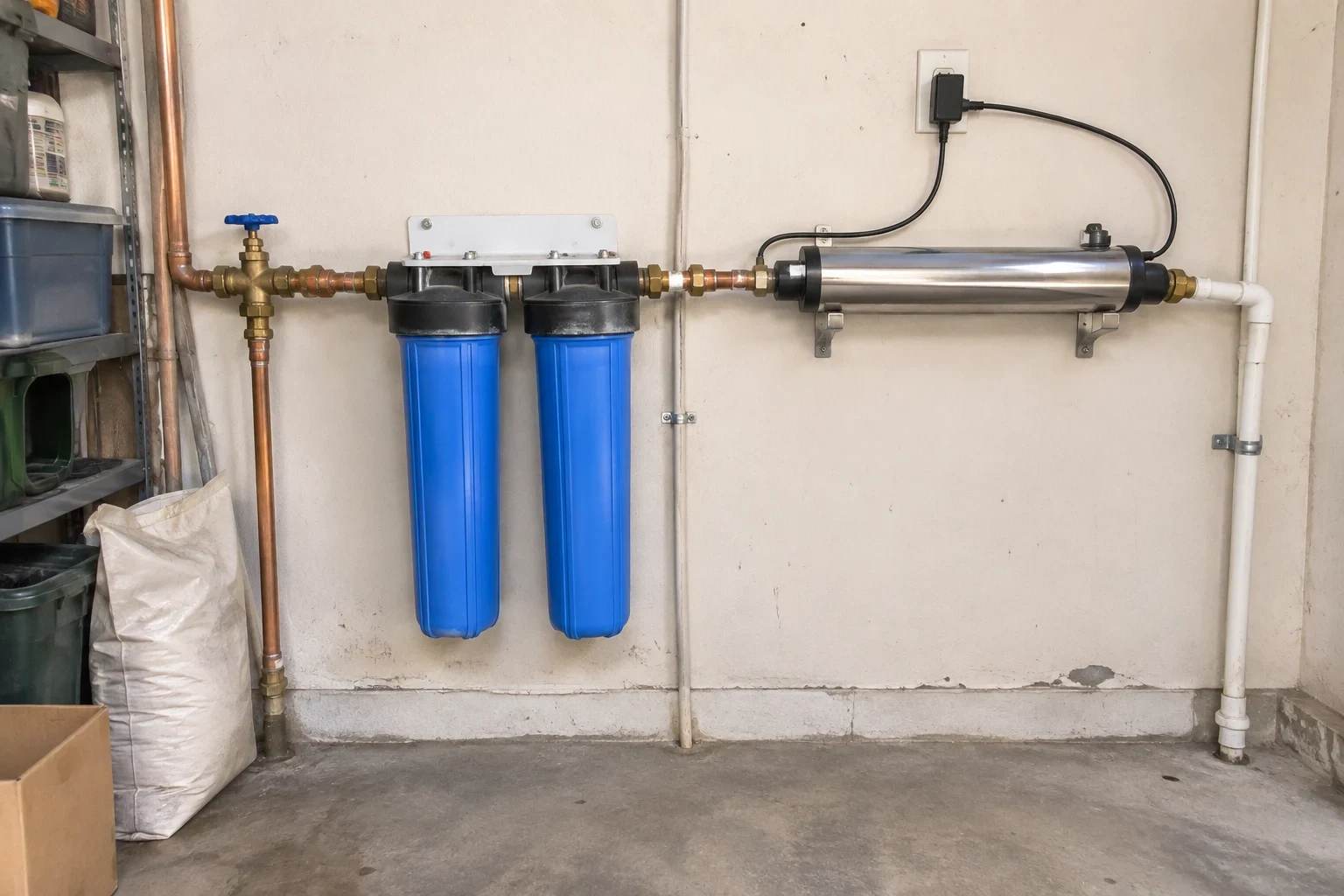
Set up once, cared for over the years
Tell us about your home and what you are noticing in the water. We will explain the system that fits and what keeping it running well looks like.