ServicesWell Water Filtration
Well Water Filtration in Thousand Oaks
A private well gives you independence, and it asks for a little care in return. We design and install filtration that handles the sediment, iron and odor your well actually carries, then set it up so keeping it running well takes minutes a season.
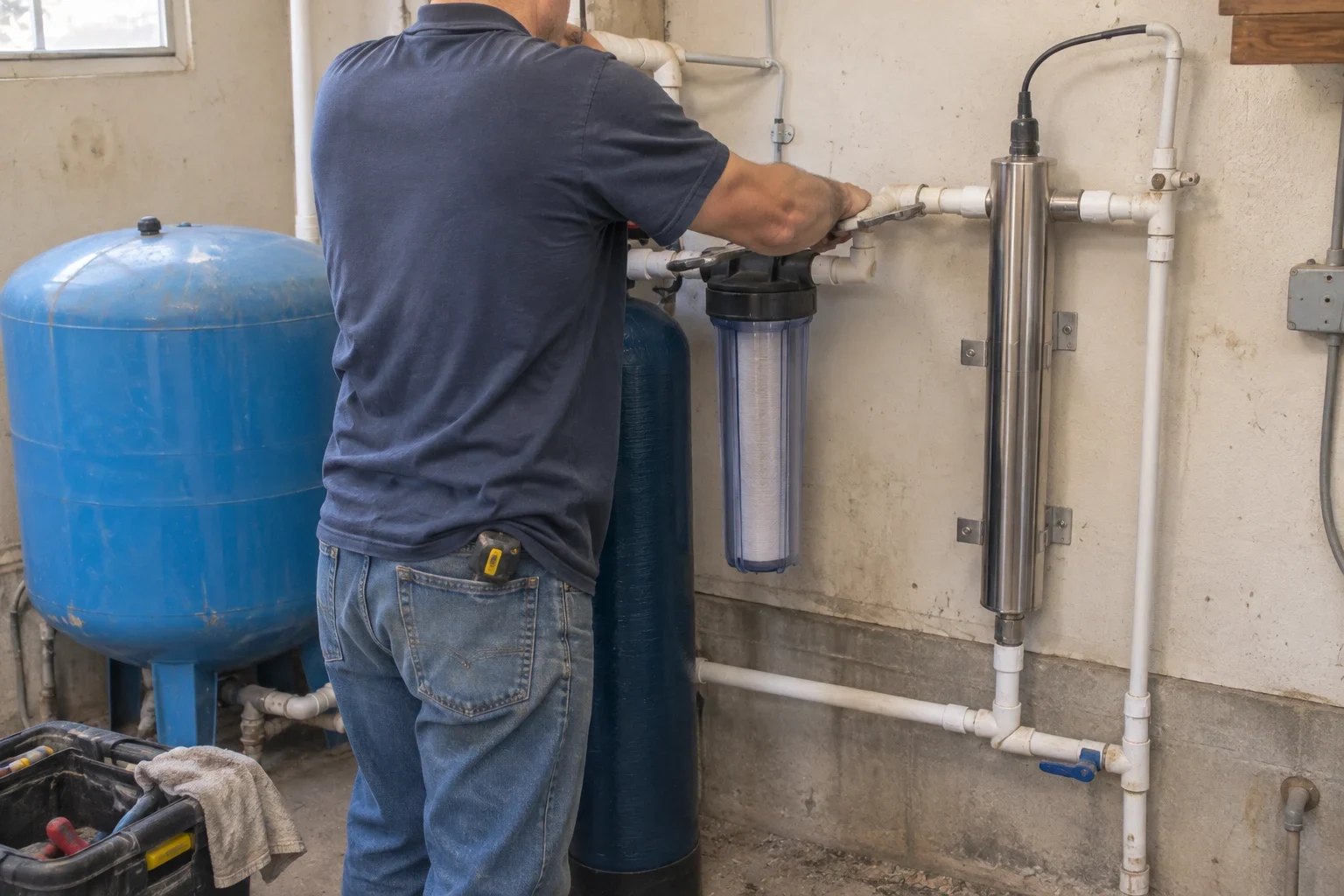
Filtration built around your well, not a catalog
Well water changes with the ground it comes from. One well runs clear but smells faintly of sulfur. Another leaves orange rings in the tub and grit in the faucet aerators. We start from what your water is doing and match the equipment to it, so you are not paying for stages that solve problems you do not have.
A well system sits right after your pressure tank and protects everything downstream: the water heater, fixture valves, appliance inlets and the finish on your sinks and glass. Clean water is the obvious result. The quieter result is plumbing that wears more slowly and fixtures that keep their finish.
Installation is free; we cover the cost. What you invest in is the right equipment and a system that is easy to care for.
What a well filtration install includes
Sediment protection first
A sediment stage catches sand, silt and scale flakes before they reach finer media. This one step does more than any other to extend the life of everything after it.
Media matched to your water
For iron, manganese or a sulfur smell, we choose media suited to the levels in your water report. We explain why each stage is there and what it removes.
Carbon for taste and odor
A carbon stage polishes the water so it tastes clean at every tap. It also handles lingering odors the earlier stages leave behind.
Clean, serviceable plumbing
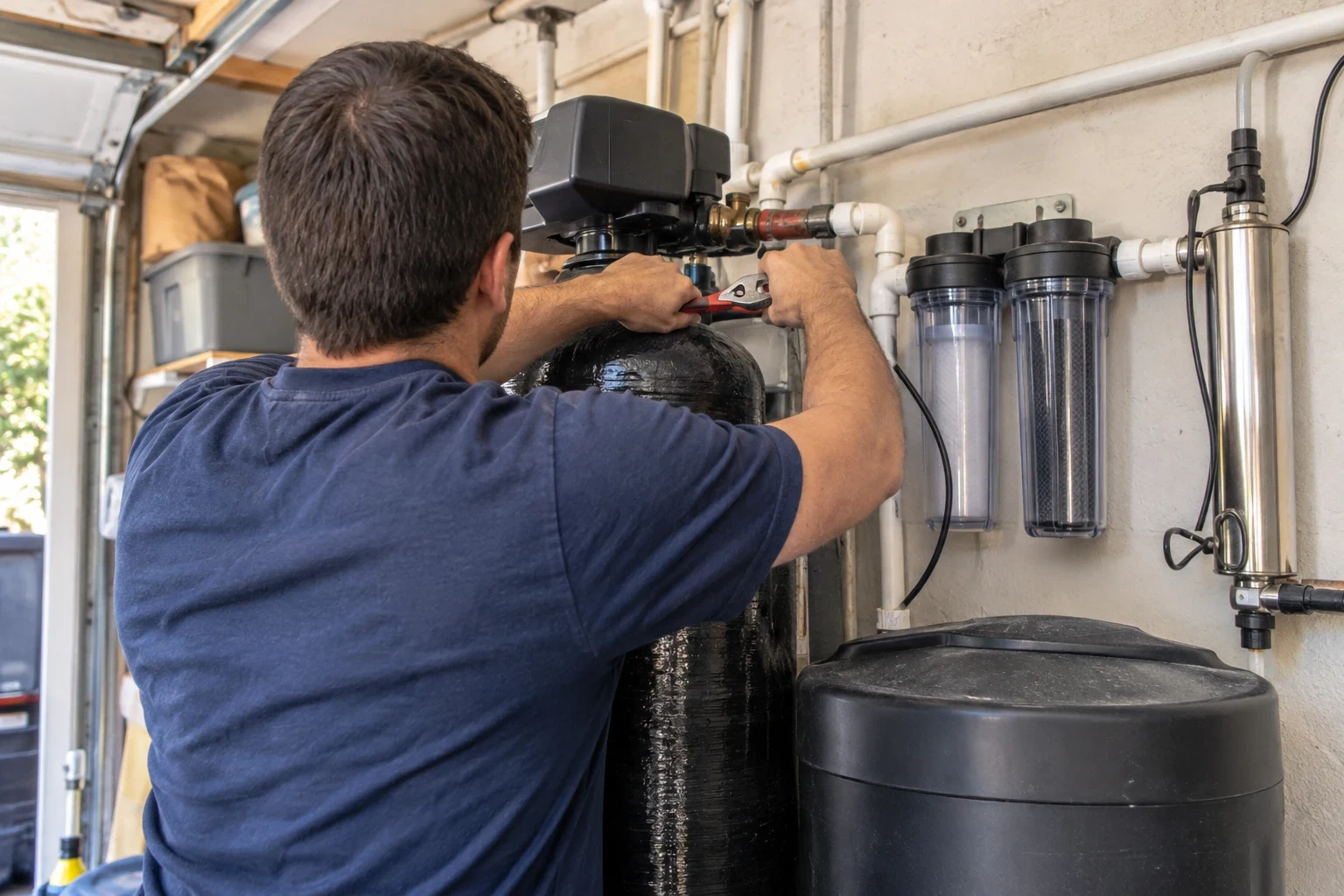
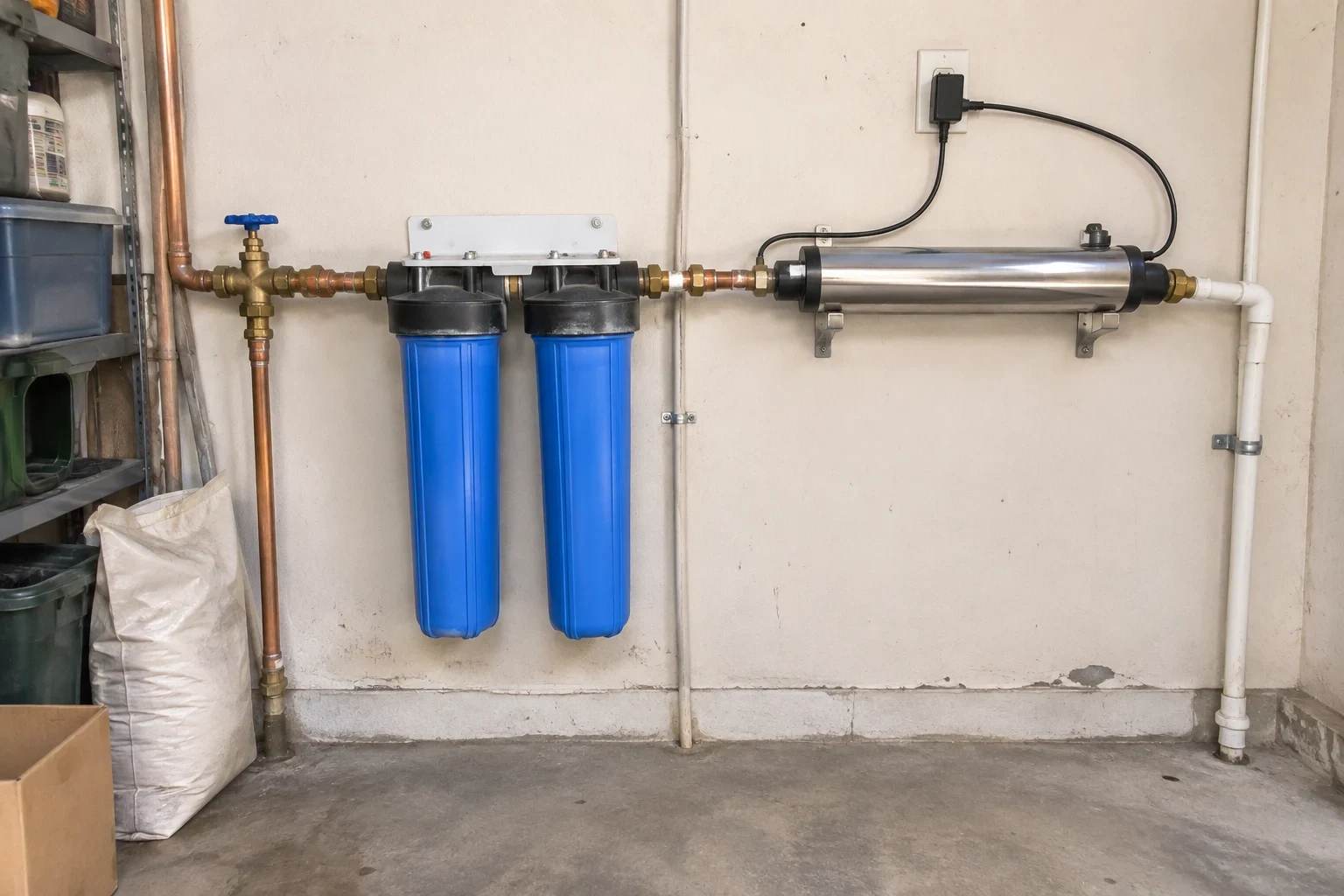
Each system gets bypass valves, so filters can be changed while the rest of the house keeps running water. We leave clearance around the housings, so reaching them later is easy rather than a squeeze.
An upkeep plan you can follow
Before we leave, you get a clear schedule for filter changes and media checks, written for your system and your water use.
Signs your well needs filtration
- Rust-colored stains
- Reddish-brown marks that keep returning in the toilet, the tub or on white clothes usually point to iron. Untreated, those same deposits build up inside fixtures and appliances out of sight.
- Water that smells like rotten eggs
- Well water often carries a sulfur smell, usually strongest from the hot tap. It is typically an annoyance rather than a danger, and the correct media takes it out.
- Sand in faucet screens
- Silt or sand gathering in aerators and appliance filters shows sediment is traveling through your pipes and wearing down valves along the way.
- Hazy or metallic-tasting water
- If your water turns cloudy or tastes of metal after heavy rain or a dry stretch, your well's quality is likely changing with the seasons.
- Dulling fixtures and spotted glasses
- Chrome loses its shine and glassware gets spotty little by little. Filtering sooner helps finishes stay the way they looked when new.
How the work runs
- 1
A conversation by phone
We ask about your well, what you are seeing at the taps and whether you have a recent lab report. That shapes what we look at in person.
- 2
A look at your setup
We visit to see the wellhead plumbing, pressure tank, available space and how water reaches the house. Then we recommend a system and explain each stage plainly.
- 3
Install day
We protect floors and the work area, shut off the water briefly, and mount the system after the pressure tank with bypass valves. Most installs take part of a day, and we clean up before we go.
- 4
Startup and walkthrough
We flush the system, check for leaks and pressure, and show you how to change filters and where the bypass is. You leave with your upkeep schedule in hand.
What shapes the cost
Because installation is on us, your cost comes down to the equipment and its ongoing care. The biggest driver is your water itself. We walk through the options so you can see what each stage adds and why.
- What is in your water
- Sediment alone needs a simple setup. Iron, manganese and sulfur together call for more specialized media and larger tanks.
- Flow rate and household use
- A larger home with several bathrooms needs equipment sized for higher flow, so pressure holds steady when showers and appliances run together.
- Space and plumbing layout
- Tight equipment areas or long runs from the pressure tank can change how the system is configured.
- Long-term upkeep
- Filter cartridges and media have their own replacement intervals. We choose components with reasonable upkeep costs so the system stays affordable to run for years.
Well water filtration questions
- Do I need a water report before you recommend a system?
- It helps a great deal. If you already have a recent lab report for your well, we design the system around those numbers. If you do not, we suggest getting one before choosing media, since guessing usually means paying for the wrong stages.
- Will filtration lower my water pressure?
- Not if the equipment fits your household. When pressure drops after an install, the cause is usually a system too small for the flow or filters left in past their change date. We size for how many fixtures run at once and give you a change schedule so the flow stays strong.
- How often does a well system need attention?
- Sediment filters often need changing every few months, depending on how much your well carries. Carbon and specialty media last considerably longer. We set your schedule based on your water and how your household uses it.
- Can I still have a reverse osmosis system for drinking water?
- Yes, and many well owners do. Well filtration treats the water for the whole house, and an under-sink reverse osmosis unit adds extra-polished water for drinking and cooking. The well system also shields the RO membrane from sediment, so it lasts longer.
- Do you work on wells outside Thousand Oaks?
- We install well filtration across the area, including Santa Rosa Valley and Moorpark. Tell us where your home is when you call.
Give your well the care it deserves
Tell us what your water is doing and we will talk through a system that fits your well and is simple to look after. Installation is free; we cover the cost.