ServicesReverse Osmosis
Reverse Osmosis in Thousand Oaks
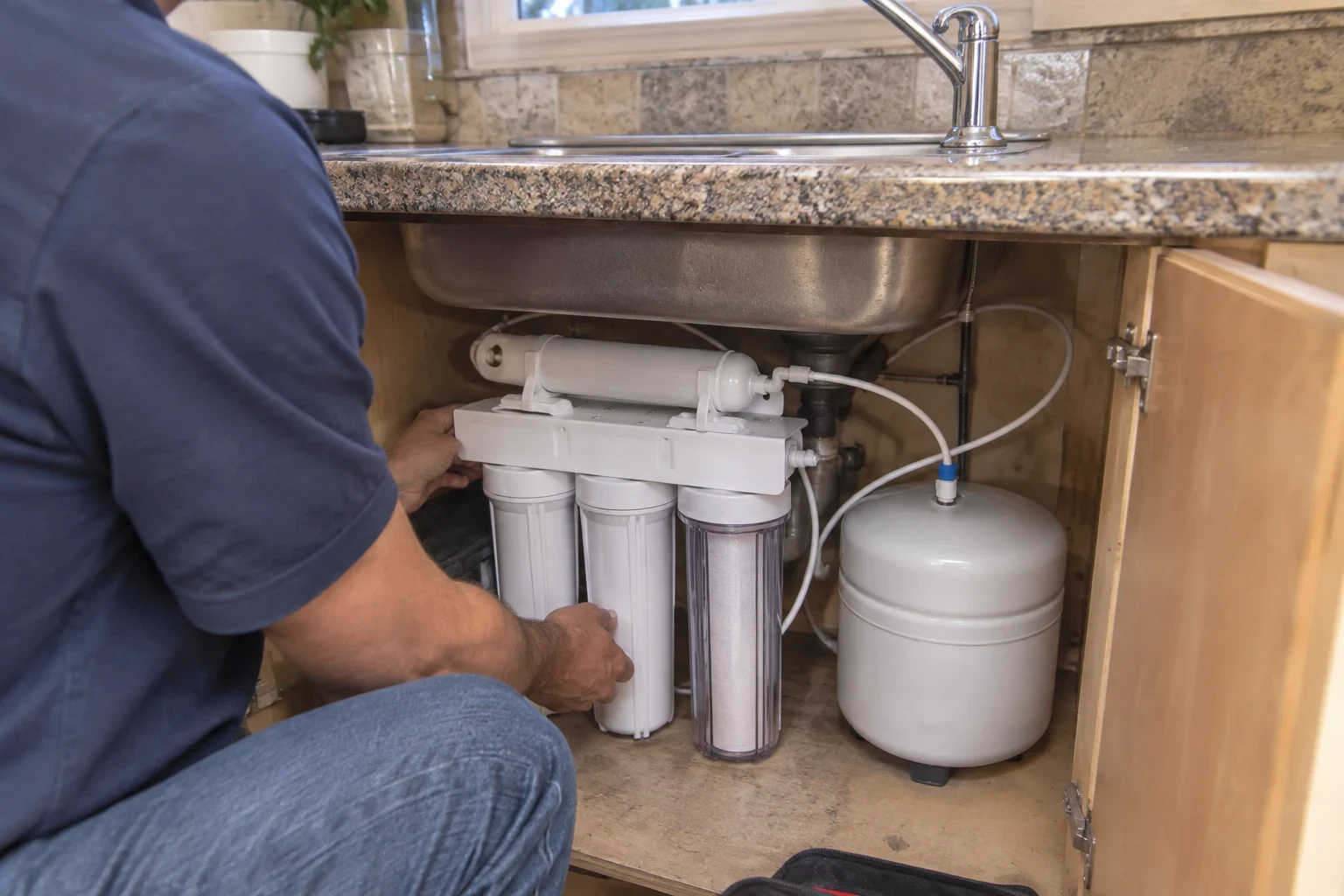
Our under-sink reverse osmosis systems add a separate faucet beside your main tap, so drinking, coffee and cooking water comes filtered. We mount each unit tidily, mark every filter for upkeep and arrange the cabinet so routine changes stay quick and simple for years.
Clean Drinking Water From One Quiet Tap
Inside a reverse osmosis system, water is pressed through a semipermeable membrane with openings far finer than an ordinary filter. Dissolved minerals, the chlorine flavor of treated water and a range of trace contaminants are left behind and rinsed away. Pre-filters shield the membrane, a compact tank stores the finished water, and a last carbon stage refines the taste before it reaches a separate faucet at your sink.
This is the system to choose when your focus is the water you drink and cook with, not every shower and appliance in your home. If you want treated water at every tap as well, our City Water Filtration and Dual Tank Water Filtration pages show how those systems work alongside an RO faucet.
A membrane lasts longest when it is looked after. We install with that in mind, keeping the replaceable parts within easy reach and the schedule easy to follow.
What Your Installation Includes
- A multi-stage under-sink system
- Sediment and carbon pre-filters, the RO membrane, a storage tank and a final carbon polisher, arranged to suit the cabinet you already have.
- A separate drinking water faucet
- When your counter already has a spare hole, perhaps left by an old sprayer or soap pump, the new faucet mounts there. If it does not, we drill a clean opening with a bit chosen for your granite, quartz or tile.
- Clean, secured connections
- A new feed valve on the cold supply, a proper drain saddle and tubing routed clear of the trash bin and disposal so nothing kinks.
- Optional fridge or ice maker line
- The refrigerator can share the system, so chilled water and ice match what comes from the faucet.
- Labeled filters and a care schedule
- Every housing shows its stage and the date it went in. You can see at a glance what is due and when.
Signs Reverse Osmosis Is the Right Call
Your tap water tastes of chlorine
Treated city water often carries a chlorine note that shows up most in plain water, tea and coffee. The carbon stages remove it.
White spots on glasses and kettles
Mineral film on drinkware and scale inside the kettle point to dissolved solids that a membrane removes from your drinking water.
You are buying bottled water
Cases of bottles mean storage, trips and plastic. A dedicated tap gives you the same use without the clutter.
An older system is overdue
Slow flow, an empty tank or a returning taste usually means filters or the membrane have reached the end of their life. We can service what you have or replace it when that is the better choice.
Cooking water matters to you
Soups, rice, pasta and baby formula all start with water. Many households simply want that water as clean as they can get it.
What Shapes the Cost
Free install (we cover the cost), so the price you hear by phone is about the equipment and a few details of your kitchen. We walk through each of those with you before anything is scheduled. That way you know what you are paying for and why.
How many filter stages
A standard five-stage unit is the simpler option. Adding a mineral cartridge, which returns a trace of calcium and magnesium to the finished water for flavor, raises the price.
Faucet and countertop
Faucet styles and finishes range in price. When there is no spare opening, granite and quartz take slower, more careful drilling than laminate.
Cabinet layout
A packed cabinet, a disposal or an awkward drain line may call for a compact unit or a few extra fittings.
Fridge and ice maker lines
Feeding the refrigerator adds tubing and connectors, and sometimes a longer route behind the cabinets.
Ongoing filter care
Pre-filters are swapped once or twice a year and the membrane less often. We tell you those running costs at the start, so the years after installation hold no surprises.
How the Work Goes
- 1
A conversation by phone
We ask what you are noticing in your water, how many people drink from the tap and whether you want a fridge line. That shapes which system we bring.
- 2
A look under the sink
On the day, we check cabinet space, the cold supply valve, the drain and the faucet options before anything is installed. If something needs a different approach, we tell you first.
- 3
Careful installation
We lay down protection in the cabinet and on the counter, mount the system, make each connection and check for leaks. Most kitchens take a few hours.
- 4
Flushing and a walkthrough
New filters and membranes are flushed before the first glass. We then show you the shutoff, the tank valve and the filter housings, and leave the work area clean.

Common Reverse Osmosis Questions
How often should the filters be replaced?
Expect to replace the sediment and carbon pre-filters about every six to twelve months, or sooner if your household uses a lot of water for drinking and cooking. With fresh pre-filters protecting it, the membrane usually lasts two to three years. Every housing is labeled with its stage and install date, so it is simple to keep up.
Do these systems waste a lot of water?
Some incoming water rinses the membrane and drains away, and that rinse stops the membrane from fouling. A correctly sized unit with clean pre-filters keeps the amount reasonable. Overdue filters raise it, which is one more reason to keep to the schedule.
Does RO water taste flat?
Since it removes so much, RO water can taste softer and plainer than people expect. A mineral cartridge adds a bit back, and many owners prefer it. We can go over both options before installing.
Is there room for it if I have a garbage disposal?
In most kitchens, yes. The tank sits to one side and the filters attach to the cabinet wall, away from the disposal. If space is very tight, we use a smaller system.
Can the system feed my refrigerator?
It can. We run tubing from the unit under the sink to the fridge, so its cold water and ice come from the same filtered water as your sink faucet.
What if the flow gets slow?
Slow flow usually means a blocked pre-filter, a membrane close to wearing out or low tank pressure. Each one is simple to fix. Call us and we will help figure out which it is.
Ready for a Better Kitchen Tap
Tell us about your sink, your water and how your household uses it. We will recommend a system that fits and explain how to keep it running well in Thousand Oaks and nearby towns such as Westlake Village and Newbury Park's neighbors in Agoura Hills.